
A Conversation with Reed Hilderbrand on Troutbeck's Landscape & River Cottages Lead Image
A Conversation with Reed Hilderbrand on Troutbeck's Landscape & River Cottages
To mark our continued partnership and in celebration of their thoughtful work integrating Troutbeck's new River Cottages into our landscape, we sat down with Beka Sturges and Michael Wideman of Reed Hilderbrand to learn of the firm's philosophy and how that translates here.
TROUTBECK: What is Reed Hilderbrand's approach to landscape architecture and what sets you apart as a firm?
BEKA STURGES, RH: At Reed Hilderbrand what we are most interested in is what it means for humans to connect in a present and daily way with the landscapes where they live and that there is an act of creativity and almost spirit that can come forward when you're able to foster an intentional—and in some ways caring—set of relationships between people and where they spend time.
We most love to work on projects where the people that we're getting to work with really are interested in asking questions around how do we make our land and our human relationships and experience deeper through understanding the possibilities of where we are. Scale is not something that defines our work, but our work is about relationships.
"We're really motivated to make beautiful relationships: human relationships and topographic relationships."
Supporting Images
MICHAEL WIDEMAN, RH: A large part of our work is not just about creating beautiful spaces, but bringing legibility to what's already there. And I think for Troutbeck in particular, we did a ton of work looking at exactly what the topography is doing and the vegetation and hydrology, and really trying to bring all that forward. There's so many ways in which the history of Troutbeck is so layered and that's visible in the landscape. Oftentimes all those layers end up becoming a little bit flustered and the original site becomes a bit muddied and it's hard to understand what the site is actually doing. Part of our work when we first started working with Troutbeck was looking at the master plan that's already been created and trying to reorganize things, reorganizing those same programs and bring forward the landscape while still satisfying all the programmatic requirements.
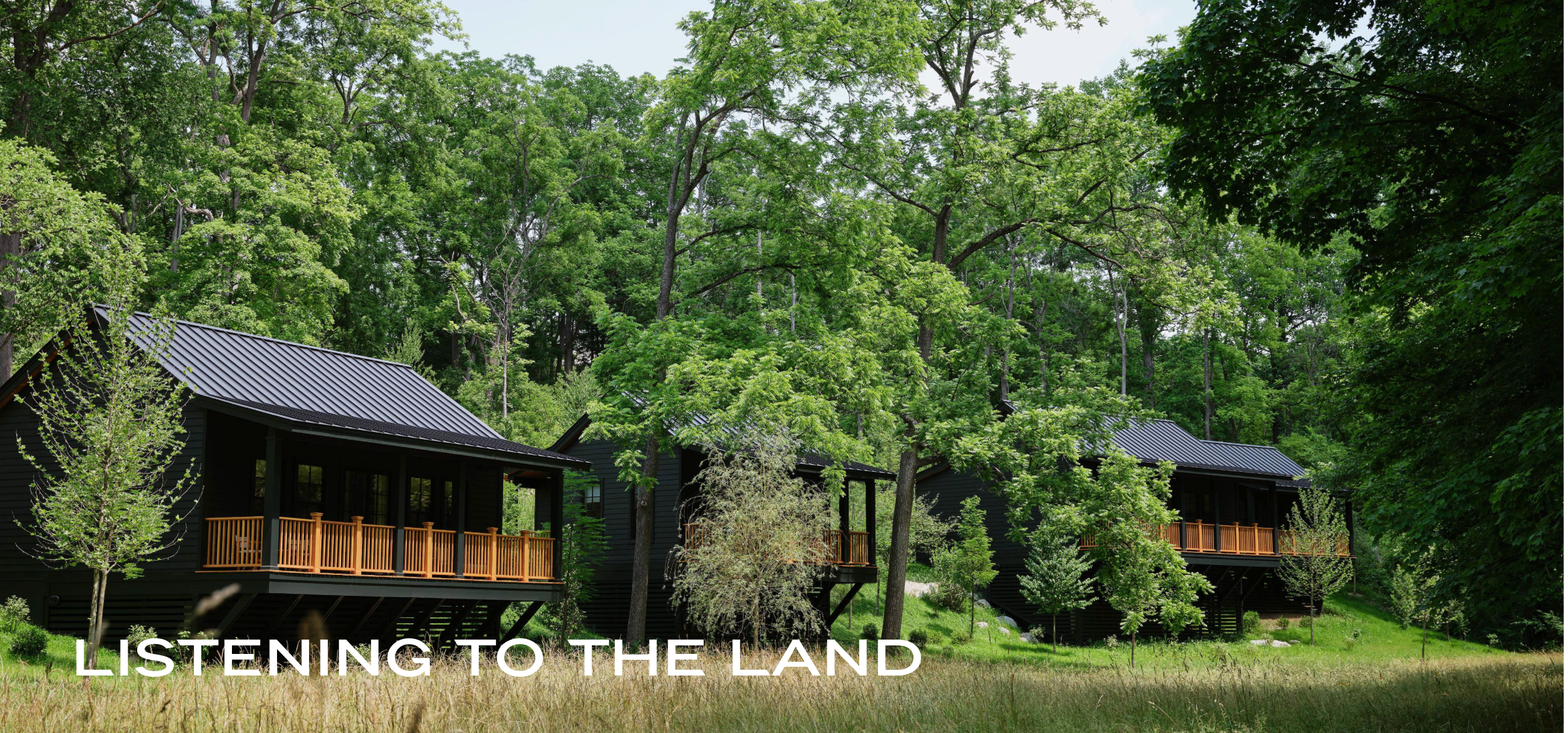
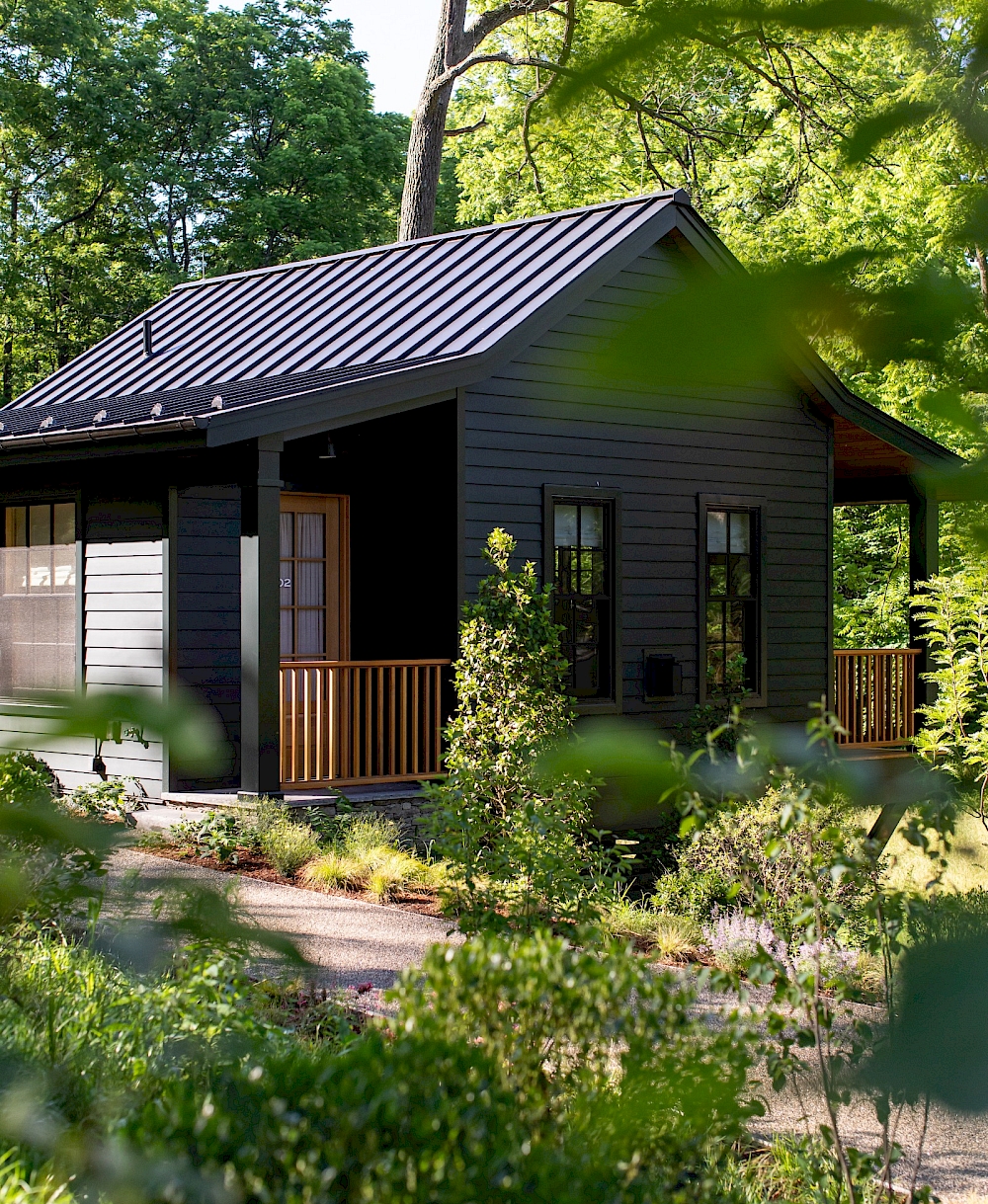
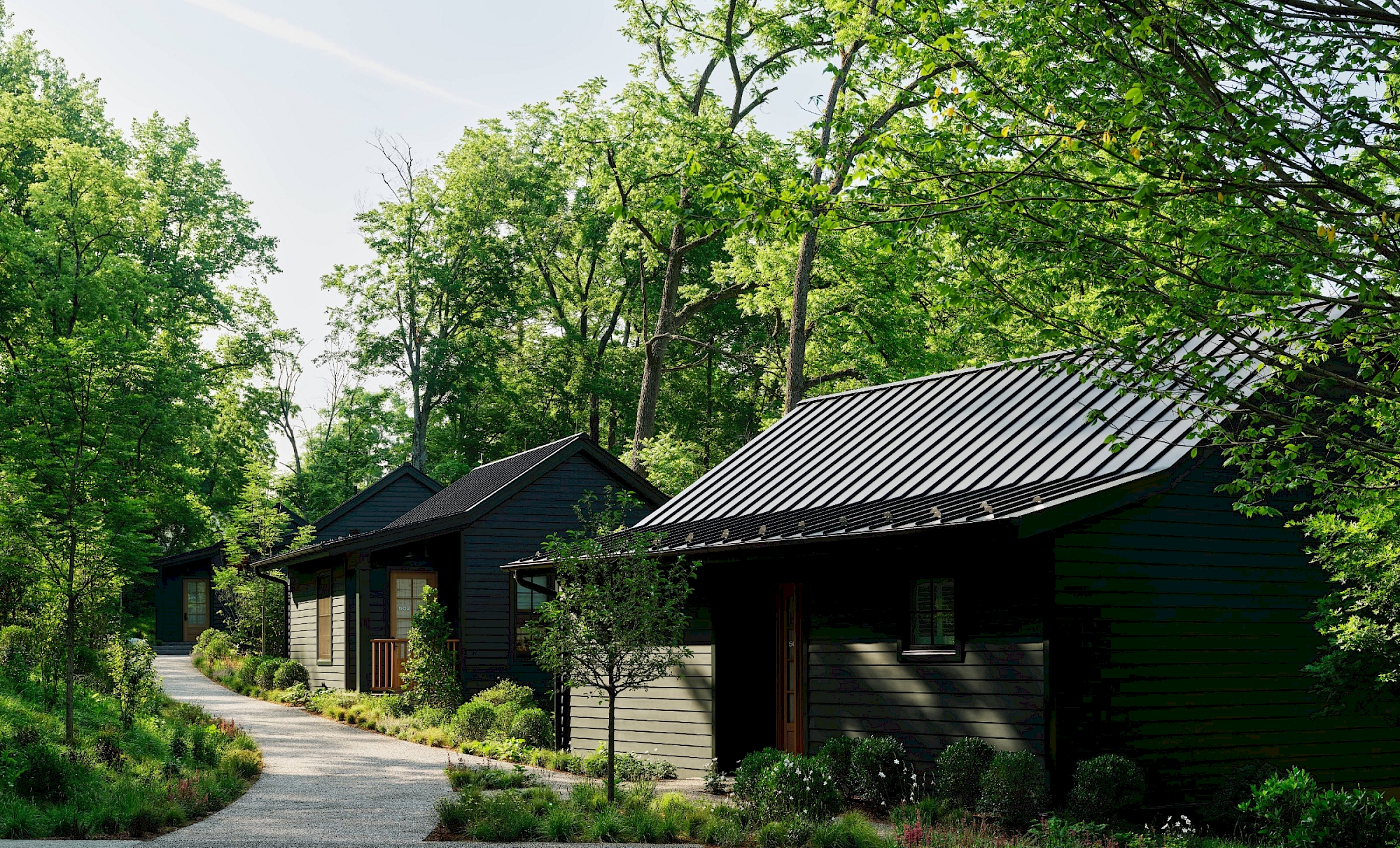
For the River Cottages, they're all very sensitively sited with the slope, and we chose our planting palette to really try and bring legibility to that in a condition that used to exist there. Even the ways we aligned the pathways and roads and walls was all following the land form and the contours so, that you can be on site and just immediately understand what the land is doing, what the vegetation historically did there. I mean you get a sense of sort of the up and downs and the flats and then all the program, parking and cottage siding and everything is keyed into all of that.
We offered a revision [to the master plan] that was based on the fact that first, you have this amazing river going through the center of Troutbeck, and we said it feels like everything needs to be based on that magical condition. And many of the most beloved parts of Troutbeck—from the bridge to the terraces outside of Manor House—are all about that. Second, you have this extraordinary garden tradition, and we sent interns to the New York Botanic Garden and they looked up the archives and found that Troutbeck for a long time had the foremost clematis collection in the nation. So we tried to bring forward not just the kind of natural systems of the river and the floodplain, the river banks, and then the woods that are kind of the hills or knolls all around, the old pastures, and this geomorphic order, and then you have this garden and development order, and taking those two principles, development of the Manor House and the gardens, we felt like that's historic preservation. You have this beautiful natural system.
TROUTBECK: It's unbelievable how fast everything became lush and looks like it belongs there. And then the fact that the architecture does defer so much to Benton Cottage (c. 1765) and the color palette of the buildings themselves. Stonehill Taylor Architecture had a nice phrase: they said, the cottages "sit lightly," and that stuck with me because they do perch within as opposed to be set upon.
BEKA STURGES, RH: We tried to keep as many trees as we possibly could. It's a testimony to Troutbeck's legacy with horticulture, because some of some of what we've done is garden. It's not totally easy resort planning planting. It's idiosyncratic, ecologically rich, but also there are some surprise choices that make it feel true to the kind of quirkiness and romance of Troutbeck.
"You have this beautiful natural system...and then you have this garden and development order, and we want everything that happens going forward to be about bringing those two conditions forward and the tensions and differences are points of beauty and experience that we want to maximize. "
TROUTBECK: Can you explain for the layman about native species and the role that they play in a project like this?
BEKA STURGES, RH: We were working with the Housatonic Valley Association on the conservation easement and trying from the very start of our work to identify critical species within the native plant community that would be most beneficial to plant was really important, and that we really wanted to work within the community that you are within to hear from your local experts about what was most important to them that for us to preserve, protect, or add or supplement was one of the starting points of the project in terms of natives.
The reality that we are living in a time where the precipitation cycles, I don't sound like a layman right now, but when it rains, it's not as predictable as the way it was before. that the presence of invasives is much greater and their sort of bullying power is much greater. How you protect without an enormous amount of resources, the kind of vulnerable native plants is a difficult question. There had been efforts at Troutbeck to establish native plantings before, but the the number of invasives and weeds that had come in and put them under pressure was a real challenge.
We tried to develop the planting that we have to be as much of "a mat" as possible, so there was as little room for invasives and weeds to come through so that invasives don't flourish. We don't really believe in 100% native strategy and that actually diversity is critical and we're at a sort of moment where I think we would say there are all these "naturalized good citizens" within the plant community and that being a bit more expansive about what is a great plant for the right site. It's good to have some level of diversity that is beyond a strict native plant palette. So our palette is not 100% native. It is really native dominant.
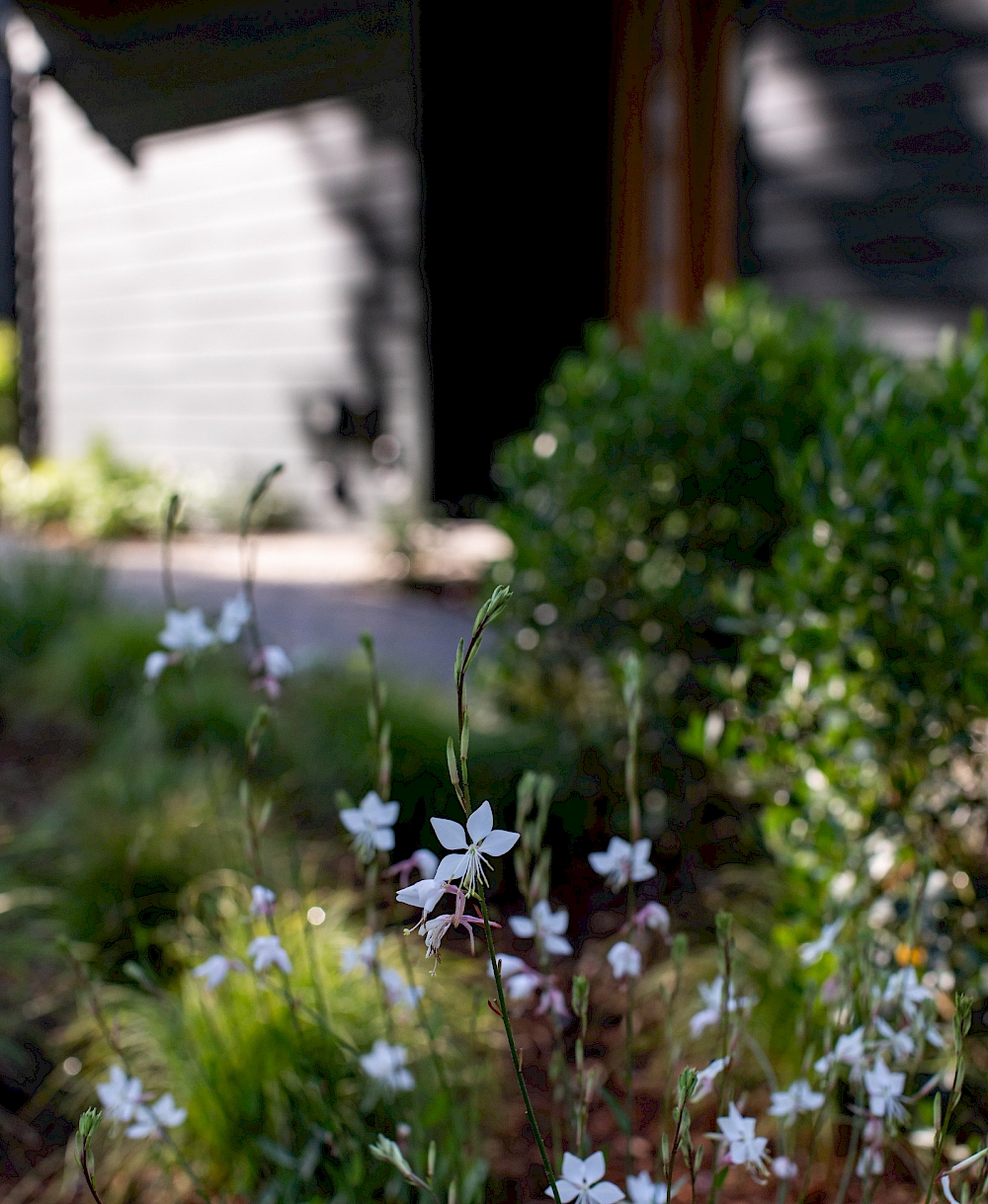
MICHAEL WIDEMAN, RH: [The site] was a massively dense stand of invasive euonymous burning bush, completely choking anything out. At the same time that euonymus was doing an amazing job of screening and we could imagine that that sort of planting quality would actually be good for the between the cabins, so in creating our majority native planting palette was choose species that were equally scrappy and full and would mimic the impression of the invasive euonymus. It will get quite tall, round and full and really fill in and provide privacy between the cottages, while also minimizing the possibility of invasives coming in. And so while it looks like beautiful and garden-like in many ways, it's also a pretty scrappy planting palette. They might look pretty, but they're super tough.
"Our hope is if people can have a much more intimate set of relationships with the natural world and with climate—which when I say climate, it's where's the sun coming from? the different times of year, wind, all the things that move, our waters, the fact that actually our soil moves and is alive—if people can start to pay attention and to care for that, I think we have a hope that the world and all of our relationships will be a little bit closer to the relationships that we dream of."